Blog

  • Writing Conference: 8 Tips for Successful Networking

    Writing Conference: 8 Tips for Successful Networking

    Believe it or not, the live writing conference still exists in the world. Successful networking can develop an author’s business allies and grow her readership. In fact, a savvy writer can advance her career by leaps and bounds at a live writing conference — assuming, of course, that she knows how to “work the crowd.”

    What Exactly is Networking for Writers?

    Networking is word-of-mouth advertising. If you’ve ever asked a friend for a restaurant recommendation, or if you’ve ever urged a relative to visit your favorite salon, then you’ve networked. 
    Business networking transpires when two or more writing professionals meet face-to-face to exchange mutually beneficial information. For example, one of the largest writers’ organizations in the United States hosts a live conference every summer in my hometown. For 30 years, the Writers League of Texas has sponsored contests for unpublished authors; face-to-face appointments with New York editors and agents; and a plethora of presentations about craft and business.

    As a bestselling author and certified life coach, I’ve helped many writers overcome their “jitters” to pitch to an agent, win a book endorsement, arrange a live book signing, or achieve their writing goals.

    In this article, I’ll share eight practical tips for successful networking that I’ve used to cultivate business allies at a live writing conference.

    Tip #1: Think Like a Business Professional

    You are an entrepreneur. At a writing conference, you must treat your experience like a business opportunity. You may have other reasons for attending the event (to enjoy the companionship of friends, for example.) However, if you want to make contacts that will help you build your writing career, you must prioritize.

    Network first; play later.

    Tip #2: Stick to Your Networking Plan

    Before the writing conference starts, you must clarify your goals. If you don’t stick to your networking plan, you may wind up in the corner, discussing the weather with three wallflowers, who won’t advance your career.

    Do you want to:

    • Meet bestselling authors who might endorse your book?
    • Meet bloggers or podcasters who welcome guests?
    • Recruit Beta Readers for your new manuscript?
    • Introduce your story concept to an agent?

    Start hunting for these people. 

    True Story #1: Networking for Success at a Writing Conference

    When I had three award-winning novels to my credit, I was determined to meet a well-respected agent, with whom I’d been corresponding. The problem was, I couldn’t get an appointment with her during a national writing conference. 

    Undaunted by this setback, I started networking at the event. Every time I crossed paths with a published author, I would ask if she knew my “target agent” and how I might recognize this woman in the crowd.

    Eventually, I ran into this agent – physically! – in a doorway. Through the grapevine, she’d heard that I was looking for her, and she invited me for a drink. During that informal meeting, she agreed to represent me. 

    Clearly, networking pays off!

    Tip #3: No Stalking Allowed at a Writing Conference

    A fine line exists between trying to meet a conference celebrity (like an agent or editor) and “stalking” a conference celebrity.

    Stalkers are icky and potentially scary. They quickly earn a bad reputation among conference celebrities. (Yes, agents and editors gossip about writers during conferences!)

    If you’ve established a two-way correspondence with a conference celebrity, be sure to notify that professional, prior to the conference, that you’d like to rendezvous. This tactic establishes you as a networker, rather than a stalker.

    Most importantly, temper your zeal for networking with the Golden Rule. (Do unto others, as you would have them do unto you.) If a writing conference is in session, and you’re in a public area during official conference times, then you can network with anyone who wears a name badge.

    On the flip side:

    • Absolutely DO NOT follow a conference celebrity into the bathroom and shove your manuscript under her stall. (Yes, I’ve seen this happen.)
    • Do not force yourself on a celebrity while she’s waiting (nervously) for the moderator to introduce her presentation.
    • Do not force yourself on a celebrity who is obviously in a hurry, dodging through the crowd to reach some unknown destination.

    Tip #4: Memorize Your Elevator Pitch

    The term “elevator pitch” was invented by sales professionals. The idea is that you should be able to build rapport with a total stranger — and pitch your product — in the short time that you are riding an elevator.

    In writing circles, an elevator pitch is called the “short pitch.” A short pitch is a 10- to 20-word “verbal hook” that describes your story concept. This line should inspire a stranger to say, “Tell me more.”

    Of course, you should also memorize a 1-2 paragraph pitch. That way, when you’re asked for more information, you can elaborate on your plot during an impromptu discussion at a writing conference.

    True Story #2: The Lucky Break

    During a writing conference, I left my cell phone in my hotel room. While I waited impatiently for the elevator to arrive, the doors rolled opened; the angels sang; and I saw my second-choice agent, standing by herself in the car. (Incredible!) Smiling, I stepped inside and introduced myself. About 90 seconds later, the agent stepped out of the car. However, in that amount of time, I had pitched my story and secured her permission to send my manuscript.

    BTW: I’ve also successfully pitched a New York editor on an escalator. (LOL!)

    Tip #5: The Secret Power of Conference Badges

    At most writing conferences, the name badge is a treasure trove of information. A ribbon might identify a contest finalist; a pin might indicate a career distinction; a color might identify a celebrity. Also revealed on most badges are the stranger’s home town and subgenre.

    If you know how to read a conference badge, you can easily invent icebreaker questions. The following examples were inspired by scanning a stranger’s badge:

    • “I see that you live in Wyoming! Is this your first visit to Texas?”
    • “I see that you’re writing Romantic Suspense. So am I! Have you finished your manuscript yet?”
    • “Wow, I see that you’re a conference speaker! What will your presentation be about?”

    Tip #6: Keep Moving; Work the Crowd at Your Writing Conference

    For most writers, networking is uncomfortable. To grow your self-confidence, practice icebreakers and elevator pitches on a non-threatening audience. In other words, start “working the crowd” by approaching aspiring authors.

    Next, approach newly published authors. New authors love to talk about their books, and they’ll happily share career tips from their publishing journey.

    As you circulate around the writing conference, you’ll hear great icebreakers from other attendees. File them in your memory bank, so you can practice on the next stranger. Eventually, you’ll discover which icebreakers are good conversation-starters, and which ones are dead ends.

    You’ll also discover which part of your elevator pitch excites strangers — and which part makes their eyes glaze. Armed with this knowledge, you may need to revise your pitch on the fly. Don’t hesitate to try out different versions of your pitch before you approach a conference celebrity.

    Tip #7: Talk Less, Listen More

    During a writing conference, the quickest way to scare off strangers is to talk incessantly about yourself. Trust me when I say, no one wants to hear your entire plot, starting with Page 1. Nor does anyone want you to interrupt their impromptu Share Session about Marketing, so you can whine about your cold hotel room.

    Networking is a two-way business conversation. However, if you’re lucky, you’ll stumble into somebody else’s business conversation and learn more than you’d ever thought of asking. In such situations, restrain your tongue if you have nothing relevant to contribute. Stand quietly, listen attentively, and thank your lucky stars that you got an earful of business savvy — for free! — from an industry leader.

    Tip #8: Detach from Clingers

    At a writing conference, “Clingers” are attendees who don’t know how to network. They may be perfectly nice, pleasant people, but they aren’t likely to help your career. In fact, Clingers may latch on to you, so they don’t look like the only person in the room without a friend.

    If you feel that your conversation with a Clinger is going nowhere, it’s time to move on. Tell her politely but firmly, “So glad I met you. I see someone else that I need to talk to. Enjoy the writing conference!”

    By the way: not all wallflowers are clingers. When I was an aspiring author, I attended a regional conference, where the keynote speaker stood idly at the rear of the buffet line. She was a New York Times bestseller, with 27 Romances to her credit. I couldn’t believe nobody was talking to her!

    Sacrificing my place near the front of the line, I struck up a conversation with her. As a result, that New York Times Bestseller corresponded with me for several months, and she endorsed my book when it was published years later!

    Remember: business networking boils down to two basics: self-confidence and social skills. If you follow the Golden Rule, you’ll make a positive impression on industry leaders at a writing conference. You’ll also build an army of contacts to help your career.

  • Positive Thinking: Writing Technique Linked to Happiness, Harvard Says

    Positive Thinking: Writing Technique Linked to Happiness, Harvard Says

    A simple writing technique can amplify positive thinking and increase your success.

    Would you like to experience more wins every day? Become happier? Increase your confidence?

    If you answered, “YES,” then I have the world’s simplest solution for you — a solution that’s backed by a Scientific Study.

    Step 1:

    Buy a notebook.

    Step 2:

    Each night, before you go to bed, record each of your daily accomplishments — no matter how small they might seem.

    But is There a Catch?

    Write Romance Novels writing classes online, plus private coaching from #1 bestselling author, Adrienne deWolfe. Learn to write Romance heroes, heroines, and other characters. Discover the secret plotting formula to write Romance novels step-by-step. Package pricing and discounts available.
    Get Chapter One advice from a #1 bestseller, who has coached Romance writers to the top of the charts, and helped them earn 4-star reviews or higher. (Click image to learn more.)

    Most of us are programmed to self-criticize.

    We brood about things that didn’t go our way.

    Texting and posting on social media, we share our woes with the world.

    Sympathetic friends get an earful when we ruin THEIR day, whining about the guy who cut us off on the freeway, the lover who never called, or the co-worker who missed her deadline, forcing us to work an hour late.

    The Harvard Business School conducted a study called, “The Progress Principle.” Researchers concluded that focusing on “small wins” activates positive chemistry in your brain that allows for a more rewarding life.

    In other words, positive thinking really works! 

    For approximately 15 years, Harvard’s Teresa Amabile and study co-author, Steven Kramer, looked at psychological experiences on the job. They surveyed people about their emotions, moods, and motivation levels. Participants were asked to keep diaries and record the events that stood out in their minds.

    Positive Thinking Can Create More “Wins”

    Amabile and Kramer learned that the daily practice of recording “small wins” helps people appreciate their daily progress. This appreciation can boost a person’s confidence, which can lead to bigger achievements and future successes.

    Remember the saying, “Life’s not about the Destination. It’s about the journey?”

    Yep. Harvard proved that.

    The study reports that Progress shouldn’t be defined solely as the accomplishment of long-term goals and major breakthroughs. While big wins can be exciting, they tend to happen far less often than “small wins” — like taking the vacuum to the repair shop (finally!)

    For this reason, we should reframe our thinking.  We should define “Progress” to include the positive, small events in our lives. For instance, you could honor your pledge to wean yourself from caffeine. Or you could start writing pesky Chapter 6.

    Activate the “Reward Circuitry” in Your Brain

    Fiction coaching for Romance writers: how to structure a romance novel, romance novel plot formula, help for your romance novel, how to write romance novels, how to write a romance novel step by step, how to write a romance novel in 30 days, romance novel formula, how to write your first romance novel, romance writing course, romance writing courses online, romance book courses, romance fiction course, romance novel writing course, writing romance novels for kindle, how to make money writing a romance novel, write romance fiction, write romance novels for money, write romance short story, write romance comedy
    Click the image to learn more.

    Amabile and Kramer wrote, “Any accomplishment, no matter how small, activates the reward circuitry of our brains.

    “When this pathway is opened, some key chemicals are released that give us a feeling of achievement and pride.

    “In particular, the neurotransmitter, dopamine, is released, which energizes us and gives us a feel-good aura.

    “This chemical enables us not only to get that sweet feeling of reward, but (it) also motivates us to take action and repeat what we did to trigger its release in the first place.”

    So what are you waiting for? Grab that notebook! All you have to do is record 1 small win in your journal each night. One win! How hard can that be, when you focus on positive thinking?

    Besides, the payoff is HUGE:  Happiness, confidence, success — and another fabulous reason to sit down and write!

    Hugs,

    Write Romance Novels writing classes online, plus private coaching from #1 bestselling author, Adrienne deWolfe. Learn to write Romance heroes, heroines, and other characters. Discover the secret plotting formula to write Romance novels step-by-step. Package pricing and discounts available.


  • Female Characters: Tips for Writing Romance Novels with Strong Heroines

    Female Characters: Tips for Writing Romance Novels with Strong Heroines

    Imagine yourself, trying to describe remarkable female characters without video, sound, color, or imagery. Your only tool is black lettering on a white page.

    Now try to create a female protagonist that modern-day readers can relate to — even if that character lives in a Viking longhouse, hunts vampires, or captains a spaceship.

    Congratulations! You’ve just accepted the challenge of writing a Romance-novel heroine!

    If you find the task daunting, you’re not alone. Heroines are the life-blood of your story. They can make — or break — an author’s career. That’s why I’m sharing a few industry insights that helped me write bestselling, award-winning Romance novels.

    Introduction & Outline

    In this article, you will discover:

    Write Romance Novels writing classes online, plus private coaching from #1 bestselling author, Adrienne deWolfe. Learn to write Romance heroes, heroines, and other characters. Discover the secret plotting formula to write Romance novels step-by-step. Package pricing and discounts available.

    Why Do Romance Novels Appeal to Women?

    To answer that question, let’s consider our roots.

    In Medieval times, if a woman dared to write her opinions for public consumption, she was shunned. She was considered lower than a whore. Even if the writer desperately needed the few pennies she earned from her manuscript to feed her child, her contemporaries treated her with contempt.

    Following the Renaissance, attitudes about a woman’s value to society improved at a snail’s pace. In the 19th Century, the prevailing belief in Western Europe was that any woman who tried to solve a complex math equation would go insane from the mental strain.

    Writing Romance novel? Learn to write strong female characters worthy of 5-stars! Become a love story author. Join our bestselling graduates! Best online Romance writing course.In Disney’s Oscar-winning, animated classic, Snow White and the Seven Dwarves, this iconic villain wasn’t given the dignity of a name. She was simply called, “The Evil Queen.” The movie was released in 1937.

    In the United States, where we like to pretend we’re forward-thinking, classic literature betrays the truth. Up until 1950, American fiction was dominated by male protagonists. If a secondary character was female, she was typically painted in an unflattering light. She was cast as a Femme Fatale, Black Widow, Gold Digger, obedient Girl Friday, subservient wife, manipulative (crazy?) relative, or helpless dependent.

    Springing from this latter category was the rare female, who got her chance at stardom. Invariably, however, she had to be rescued by a more powerful (wiser?) leading man, who saved her from poverty, physical danger, or the “foolish choices” that she had made.

    Before 1950 in American fiction, if a leading female had some aspiration other than marriage (Translation: making a man happy,) then the plot shamed her. To further discourage female equality, authors would punish their outspoken, willful (ie, “evil”) female characters at the book’s end.

    As a result, American fiction taught readers that nonconformity doomed a woman to loneliness, alcoholism, prison, insanity — or worse.

    The Emergence of Strong Female Characters

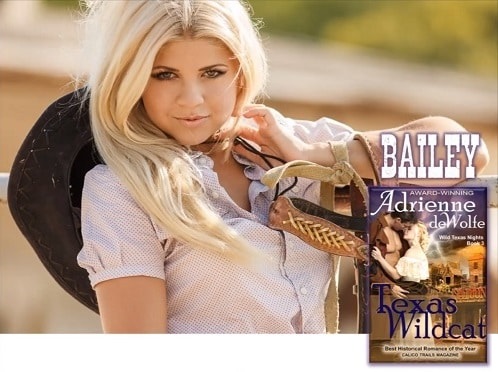
    Writing Romance novel? Learn to write strong female characters worthy of 5-stars! Become a love story author. Join our bestselling graduates! Best online Romance writing course.Meet Bailey McShane, winner of the Strong Woman Heroine Award, from a book that was named Best Historical Romance of the Year. Click the image to learn more.

    “Well-behaved women rarely make history.”

    ~ Eleanor Roosevelt

    Needless to say, women started hunting for more appealing role models in literature. The rise of strong, female characters sprang from the ever-growing demand to let women’s voices be heard. 

    Today, the world’s fiction market is dominated by Romance novels, which account for approximately 50 percent of all mass market sales. Romance’s closest competitor is the Mystery genre, which accounts for roughly 18 percent.

    Commercial Romance readers (80% of whom are female) want novels that focus on the adventures of women. As a result, Romance novels elevate female leads to the larger-than-life status, traditionally enjoyed by male protagonists. A female Romance protagonist might solve crimes, discover medical cures, topple corrupt governments, manage multi-billion-dollar corporations, colonize alien worlds…

    In short, female characters buck the status quo. For this reason, they have earned the right to be called “heroines.”  The term was coined in commercial Romance to convey that female protagonists are worthy leaders — just like their male counterparts, who have always been called “heroes” in other genres. 

    The Unique Challenge of Characterizing a Romance

    The Romance genre is the only form of commercial fiction that features two protagonists. This convention makes Romance novels much harder to characterize than Mysteries and Fantasies.

    As an aspiring Romance author, you must accept that the heroine is the primary character. Your story is about her quest for true love. Therefore, the heroine’s ever-evolving feelings for the hero (and his ever-evolving feelings for her) must dominate every chapter.

    Writing about love? Learn how to write a Romance between characters, how to write Romantic tension, and how to write a Romantic scene. Become a love story writer by joining the many successful Romance writers who have graduated from our course and are writing Romance novels for money. In this online novel writing course, learn how to make money writing Romance, how to write alpha heroes, how to write sexy Romance novels.Writing Romance? A ho-hum hero kills sales! Learn how men think and communicate; turn your Romance heroes into heartthrobs! On-demand video course, taught by a #1 bestselling author. Private coaching and package discounts. Click image to learn more.

    If you let a subplot, like a murder investigation or a ghost hunt, overshadow the love story, then you are no longer writing a commercial Romance. You are writing a Mystery or Fantasy, neither of which attracts the whopping readership, currently enjoyed by the Romance industry.

    (Hint: The previous paragraph is so important to your success, I suggest that you read it again.)

    Even though the Romance hero is not considered equal to the heroine, his characterization is a vital component of your success. He serves as the catalyst that forces her to grow. He becomes her reward when she proves herself worthy of a happy ending.

    Frankly, most fans read Romance novels to experience the vicarious thrill of falling in love. (Translation: you’d better be writing a hero, who’s memorable and exciting!)

    However, a reader’s vehicle for experiencing that thrill is the heroine. Whether a reader purchases a Contemporary, Historical, or Paranormal Romance, she expects to live under the skin of the heroine.

    Thus, readers demand heroines, whom they can admire, respect, and understand. 

    Tips for Writing Memorable Female Characters

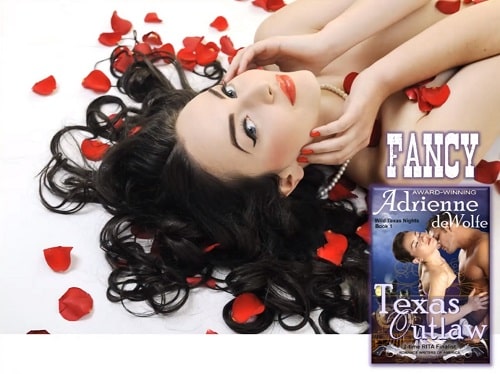
    Writing Romance novel? Learn to write strong female characters worthy of 5-stars! Become a love story author. Join our bestselling graduates! Best online Romance writing course.Meet Fancy Holleday, winner of the Honey of a Heroine Award, from a Historical Western Romance that was a 2X Rita finalist. Click the image to learn more.

    Personally, I love to read and write about female rebels.

    However, any female persona can become a successful Romance heroine — even a wallflower. (The trick, of course, is to write a wallflower who’s sympathetic, not pathetic.)

    Throughout my career, my heroines have earned awards and accolades. They achieved these recognitions because I forced them to grow, facing obstacles that allowed readers to identify with them and cheer them on.

    In the spirit of helping you create your own, remarkable heroines, I’ll share a couple of lessons that I’ve learned along my Writer’s Journey.

    Tip #1: Understand the audience that reads your subgenre.

    Before you spend months, developing your heroine, do your market research. Learn what’s trending in your subgenre. To this end, I strongly recommend that you read at least 30 new books by different new authors. Make sure you choose commercial Romance novels (in other words, don’t choose Mysteries or Fantasies with a “romantic subplot.”) When in doubt, focus on authors, whose debut novels were published by traditional Romance houses within the last 2 years.

    Tip #2: Write relatable heroines.

    Writing Romance novel? Learn to write strong female characters worthy of 5-stars! Become a love story author. Join our bestselling graduates! Best online Romance writing course.Regardless of age, color, or historical era, your heroine needs to be written so that Romance readers can understand her.

    For example, 21st Century women haven’t faced the threat of being scalped by a Sioux war party. However, modern readers can relate to the terror of having their homes burglarized, or the desperate need to protect their children.

    To help your readers understand your heroine’s dilemma, you must make them feel what your heroine feels. This wisdom is especially true, if you want readers to buy your next book.

    Writing Romance novel? Learn to write strong female characters worthy of 5-stars! Become a love story author. Join our bestselling graduates! Best online Romance writing course.You must plan a story arc for your heroine that shows her growing into a better Human Being. Since you’re writing a Romance novel, her evolution should be significantly impacted by the Power of Love.

    Tip #3: You may not like your heroine when the story opens.

    A protagonist must grow in any work of fiction. Your heroine can’t appear in Chapter One as a wholly evolved, shining example of womanhood. (Yes, I know. You’re that shining example, but your heroine isn’t you, remember?)

    The truth is, you may not like your heroine at the beginning of the book. That’s okay. Let her stumble. Make her acknowledge her mistakes. Show how she strives to do better.

    Your plot is her journey, so let her reach for the stars. In the process, she’ll win your heart, along with your hero’s.  

    Tip #4: Ignore the literary trolls: writing with emotion *IS* the key to your success.

    Over the years, many aspiring authors have come to me — in tears — because some clueless windbag denounced their Romance writing as Purple Prose.

    Writing Romance novel? Learn to write strong female characters worthy of 5-stars! Become a love story author. Join our bestselling graduates! Best online Romance writing course.Want my advice?

    Laugh all the way to the bank.

    Our audience wants feel-good entertainment. They want to be inspired, uplifted, and reassured by a boy-meets-girl story. They urgently want to know that Love has a real and measurable power, and that it’s available to all people, regardless of age, race, physical beauty, or past mistakes.

    The best way to help a Romance reader connect with “Love Feelings” is to drop her into the head of your heroine and write luscious, evocative prose. This prose should be designed to stimulate visceral emotion.

    Tip #5: Nobody likes stupid, cowardly heroines.

    Fiction coaching for Romance writers: how to structure a romance novel, romance novel plot formula, help for your romance novel, how to write romance novels, how to write a romance novel step by step, how to write a romance novel in 30 days, romance novel formula, how to write your first romance novel, romance writing course, romance writing courses online, romance book courses, romance fiction course, romance novel writing course, writing romance novels for kindle, how to make money writing a romance novel, write romance fiction, write romance novels for money, write romance short story, write romance comedyClick the image to learn more.

    Let me be clear. By “stupid,” I mean a heroine that is so short-sighted, or unrealistically optimistic, that she becomes a victim of her own ignorance.

    For example, a certain Romance author has lost me forever as a paying customer. She plots contrived rescue scenes, which make her heroines look like idiots.

    For instance, in one such book, the heroine flees at night from a medieval castle during a blizzard. She has NO cloak, NO horse, NO weapon, NO provisions, NO light source, and NO hope of shelter for hundreds of miles.

    The next, wholly predictable scene shows the hero, using his body heat to revive her (which, by the way, is the oldest, sexual-tension cliché in literature.)

    Sadly, this book could have been saved by a simple plot adjustment, made by a developmental editor, who knows how to apply the Romance-writing formula.

    (Learn how a developmental editor can help you plot a love story that readers want to buy!)

    Tip #6: Your heroine must help readers fall in love — with the correct heartthrob.

    Writing about love? Learn how to write a Romantic Scene & add chemistry between a hero & heroine. Put the "zing" in a slow burn Romance novel!Writing a Romance love scene? Take your hero to the next level; craft a sizzling seduction! On-demand, novel-writing course, taught by a #1 bestselling author. Private coaching and package discounts available. Click image to learn more.

    Sounds like a no-brainer, right?

    But many aspiring authors grow bored with their hero. To fix the sizzle in their love story, these authors ramp up the sexual tension between the sidekick and the heroine.

    Warning! You’re killing your sales!

    Readers of commercial Romance want a story that assures them that fidelity is alive and well. They want the satisfaction of watching the heroine get the hero (aka, the man of her dreams) at the novel’s end.

    If readers wanted to see the heroine hop into bed with multiple partners, they would NOT be reading commercial Romance.

    Therefore, if you’ve grown bored with your hero, you need to do your job as a Romance writer. Deepen the development of his character.

    Ironically, as you improve your characterization skills, one of your male sidekicks may become dangerously appealing. He may start to clamor for your attention and demand more “scene time.”

    However, no secondary male should ever eclipse the hero. If a sidekick is truly a heartthrob, then he can be elevated to the starring-role in your next book.

    In the meantime, make your hero a worthy mate. Show readers why the heroine is falling in love with him. If she can’t accept some tiny flaw in his character, perhaps she needs to develop compassion. (Or perhaps he needs to behave like a responsible adult!) Either way, personality flaws open the door to a character’s growth and a reader’s empathy.

    Remember: Your audience will fall happily for your hero as long as your heroine demonstrates credible reasons to love him.

    Happy writing!

    Hugs,

    Write Romance Novels writing classes online, plus private coaching from #1 bestselling author, Adrienne deWolfe. Learn to write Romance heroes, heroines, and other characters. Discover the secret plotting formula to write Romance novels step-by-step. Package pricing and discounts available.


  • How to Start a Romance Novel and Write Chapter 1

    How to Start a Romance Novel and Write Chapter 1

    Aspiring authors struggle, wondering how to start a Romance novel. In an effort to improve their manuscripts, newbies often seek feedback from other writers.

    However, listening to the wrong advice can add years to your pre-published journey. In fact, you may already be turning your manuscript into a stale, homogenized tale that will ultimately kill your sales!

    Ready to Hear the truth about Romance Writing?

    how to start a romance novel, self paced online romance novel course, self paced online romance writing class, self paced class for writing Romance, self paced Romance novel class, learn how to write Romance, learn how to write Romance novels, write romance books, write romance, write romance novels, self paced online writing course for Romance novels, self paced class for Romance books, self paced online class for Romantic fiction, how to write romance, how to write steamy books, how to write Regency Romance, how to write Paranormal Romance, how to write Historical Romance, how to write Romantic Suspense, How to Write Romantic Comedy, how to write erotic books, how to write erotic romance, how to write Erotica, self paced online class for writing sex scenes, how to write erotic Romance novels, publish romance, self publish romance, sell romance novels, market books, market fiction online, sell romance novels online, sell romance novels, learn to write romance, learn to write romance online, learn to write romance
    Get Chapter One advice from a #1 bestseller. Adrienne deWolfe has coached Romance writers to the top of the bestseller charts, and she has helped them consistently earn 4-star reviews or higher. (Click image to learn more.)

    Asking amateurs for writing feedback is like asking third graders for stock-market tips.

    To save yourself a lot of heartache, you must accept that Chapter One is a trial-by-fire.

    Your opening chapter requires sophisticated fiction-writing skills, which most aspiring authors are only starting to learn. (So why would you consult them for feedback?)

    By the way: if you’re consulting writers of another fiction genre for feedback, your chance of receiving “uneducated opinions” will increase exponentially. So will your risk of poor reviews and lousy sales. Mystery and Fantasy writers are NOT bound by the same fiction rules as Romance writers.

    Your Paycheck Depends on Chapter One!

    Writing Romance? Learn how to write romance novels step-by-step from a #1 bestselling author. Online novel writing courses include video instruction and private coaching.
    Save time and reduce revisions! Master the Romance-plotting formula. (Click image to learn more.)

    When you’re learning how to start a Romance novel, it’s important to realize that diehard fans “vote” with their pocketbook. Readers gauge the quality of your love story with an excerpt.

    Amazon is especially generous to your readers. It excerpts your first chapter (in its entirety,) plus multiple other chapters, based on the total page count of your book.

    Now imagine readers becoming bored — or worse, confused — by your first chapter. Nothing is more disheartening than watching your free book get zero downloads on Amazon!

    BTW: The reasons for this calamity are legion. Typically, however, the Indie Author is guilty of publishing stale, homogenized scenes because she listened to the writing advice of well-meaning (but clueless) Beta Readers.

    Here’s a True Story of the “Clueless” Variety

    I recently had the opportunity to observe a “critique group” (Beta Readers.) These Betas were eager to show a new member how to start a Romance novel.

    Fiction coaching for Romance writers: how to structure a romance novel, romance novel plot formula, help for your romance novel, how to write romance novels, how to write a romance novel step by step, how to write a romance novel in 30 days, romance novel formula, how to write your first romance novel, romance writing course, romance writing courses online, romance book courses, romance fiction course, romance novel writing course, writing romance novels for kindle, how to make money writing a romance novel, write romance fiction, write romance novels for money, write romance short story, write romance comedy
    Click image to learn more.

    I was horrified when the Betas attacked a perfectly good story. Displaying a sort of “mob mentality,” they claimed that they were identifying story flaws.

    In reality, they were venting their pent-up frustrations by spouting personal prejudice and Urban Myth.

    For instance, the Literary Crusaders claimed that:

    • Editors hate books with Prologues, and Traditional Publishers won’t buy them.

    This criticism is Urban Myth. I’ve written 2 books with prologues. Avon published them both. More to the point, those Romances won awards and became bestsellers. When an editor rejects a Romance manuscript based on its prologue, the editor’s concern is that the author delayed the love story.

    • A heroine should never have an exotic name (or a name with an unusual spelling.) Weird character names “turn off” readers.

    This criticism is Personal Prejudice. New York Times bestseller, Sarah MacLean, invented a heroine named, “Culpernia Hartwell.” Romance fans loved Culpernia’s story and drove it up the charts. They also loved “Xenobia India” (the invention of NYT Bestseller Eloisa James) and “Cidra Rainforest,” (the invention of NYT bestseller, Jayne Ann Krentz.) Clearly, a heroine’s name has little or no impact on the buying decision of readers.

    Introducing the Hero & Heroine is Just the Beginning…

    Sure, Romance readers expect you to introduce your main characters in Chapter One. But they also expect you to lay the foundation of your entire plot. (Surprise!)

    Think of your chapters as a line of dominoes, waiting to be pushed. If you fail to set-up your love story adequately, then those dominoes will not fall.

    In other words:

    • Your plot will hinge on unbelievable “coincidences.”
    • Your story-pacing will drag.
    • Your characters will lose their appeal and read like “talking heads.” 
    • Your reader will stop reading. (Translation: you’ve bored her so thoroughly that you’ve lost her as a future source of income.)

    How to Start a Romance Novel & Make Money!

    Most aspiring authors are too green to realize that they’re revising Chapter One, ad nauseum, to address criticisms that have no bearing on book sales.

    However, Chapter One doesn’t have to be daunting. Bestselling Romance authors have developed techniques and strategies that you can learn — today! — to improve your chances of success.

    Are you REALLY ready to get paid for your work-in-progress?

    Then check out my self-paced video course, Where Do I Start My (Freaking) Romance Novel? You’ll find oodles of tips and tricks that allowed me to write 6 award-winning bestsellers. Best of all, I’ve based the curriculum on interactions with:

    • 3 literary agents;
    • 2 editors from traditional Romance publishers;
    • 1 independent ebook publisher (the 5th-largest in the country); and
    • Dozens of popular Romance authors, whose novels have topped bestseller charts at The New York Times, USA Today, and Amazon.


    Fix the Chapter 1 writing traps that stall book sales and rack up poor reviews. Click the image to learn more.

    BTW: If you like cats (and humor,) you’ll love my course. 🙂Click here to see a lesson sample.

    Keep the faith, and keep writing…

    Hugs,

    Write Romance Novels writing classes online, plus private coaching from #1 bestselling author, Adrienne deWolfe. Learn to write Romance heroes, heroines, and other characters. Discover the secret plotting formula to write Romance novels step-by-step. Package pricing and discounts available.


  • Love Story Authors: Here’s How to Write a Romance Novel Hero that SELLS

    Love Story Authors: Here’s How to Write a Romance Novel Hero that SELLS

    As a love story author, you’re probably studying how to write a Romance novel. But have you ever wondered why bestsellers keep churning out the same hero, book after book?

    Just to be clear: I’m not talking about elevating the sidekick in Book 1, to hero status in Book 2. I’m talking about applying the same basic, male persona to every Romance hero, regardless of his profession or historical era. For instance, our genre is full of Aristocratic Lords, CEO/Billionaires, Warriors (Knights, Vikings, Gunfighters, Army Leaders…etc.) Can you see the personality-pattern here?

    Call me crazy, but I used to think that authors, who did little more than change the name and hair color of their Romance heroes, lacked creativity.

    Fortunately, I wised up.

    Make Money as a Love Story Author

    Writing about love? Learn how to write a Romance between characters, how to write Romantic tension, and how to write a Romantic scene. Become a love story writer by joining the many successful Romance writers who have graduated from our course and are writing Romance novels for money. In this online novel writing course, learn how to make money writing Romance, how to write alpha heroes, how to write sexy Romance novels.
    Learn the secrets of writing bestselling heroes in our online video course! Private coaching and package discounts available. Click the image to learn more.

    Bestselling Romance authors wouldn’t keep writing the same types of heroes, in book after book, if readers weren’t eagerly buying those novels.

    In other words, our readers are perfectly happy, immersing themselves in familiar stories.

    According to psychologists, readers are ruled by their subconscious. The subconscious responds most favorably to Romance characters that have withstood the test of time: the Prince, the Warrior, the Rebel, the Mentor etc. These characters are called “archetypes.”

    Romance readers are mostly women, so there’s no coincidence that Romance novels feature archetypal heroes and heroines in a starring role.

    Archetypal Romance characters let readers (and writers!) connect with deeply rooted parts of their psyches. Through archetypal Romance characters, a reader gets to experience parts of herself that she admires, loves, or secretly wishes she could reveal more fully to the world.

    If a reader can connect emotionally with your hero and heroine in an excerpt on Amazon, then she’ll become invested in the outcome of your book.

    An invested reader is more likely to open her wallet.

    How to Write a Romance Novel Hero

    Writing a Romance novel? Learn how to write sexy heroes and sizzling seductions for your love stories. Online video courses, taught by a #1 bestselling, award-winning Romance author.
    Learn how to write a sensual Romance love scene, featuring a sexy hero and a sizzling seduction! On-demand video course. Private coaching and package discounts available. Click image to learn more.

    Sexy heroes sell books. While the Prince (or King) archetype remains a perennial favorite, he has stiff competition among Warriors and Rebels. As a result, a bestselling love story author may blend several archetypes into a single Romance hero. This technique makes a character complex, interesting, and memorable.

    Savvy authors know that readers vote for their favorite hero-types with their buying dollars. If you want to make money writing Romance novels, research your subgenre’s bestseller charts before you write Chapter 1. Figure out which archetypes your target audience prefers.

    how to start a romance novel, self paced online romance novel course, self paced online romance writing class, self paced class for writing Romance, self paced Romance novel class, learn how to write Romance, learn how to write Romance novels, write romance books, write romance, write romance novels, self paced online writing course for Romance novels, self paced class for Romance books, self paced online class for Romantic fiction, how to write romance, how to write steamy books, how to write Regency Romance, how to write Paranormal Romance, how to write Historical Romance, how to write Romantic Suspense, How to Write Romantic Comedy, how to write erotic books, how to write erotic romance, how to write Erotica, self paced online class for writing sex scenes, how to write erotic Romance novels, publish romance, self publish romance, sell romance novels, market books, market fiction online, sell romance novels online, sell romance novels, learn to write romance, learn to write romance online, learn to write romance, love story author
    Love story authors: Learn how to start a Romance novel! Our (hilarious) Chapter One course is jam-packed with writing tips you can really use, PLUS an awesome bonus lesson. Make readers WANT to buy your book! On-demand video course. Private coaching and package discounts available. Click image to learn more.

    Once you settle on an archetype, you must develop an endearing Romance hero, who’s sexually magnetic and who’s the perfect foil for your heroine. Readers will grow bored—fast!—if you can’t keep the sparks flying between your hero and heroine on every page of your novel. Translation: If you’re receiving rejection letters or poor reviews, you probably dropped the ball.

    A successful love story author escalates the romantic tension before, during, and after every kiss and consummation scene. To accomplish this feat, she must master two writing techniques that are specific to the commercial Romance genre: sexual tension and emotional tension.

    Unfortunately, these techniques are rarely taught in traditional courses devoted to fiction-writing or creative-writing. That’s why I developed my on-demand video course, 50 Ways to Give Your Hero Sex Appeal. Check it out if you want to win loyal Romance fans and create a niche for yourself in our crowded genre!

    Click here to see a lesson sample.

error: This content is copyright protected.